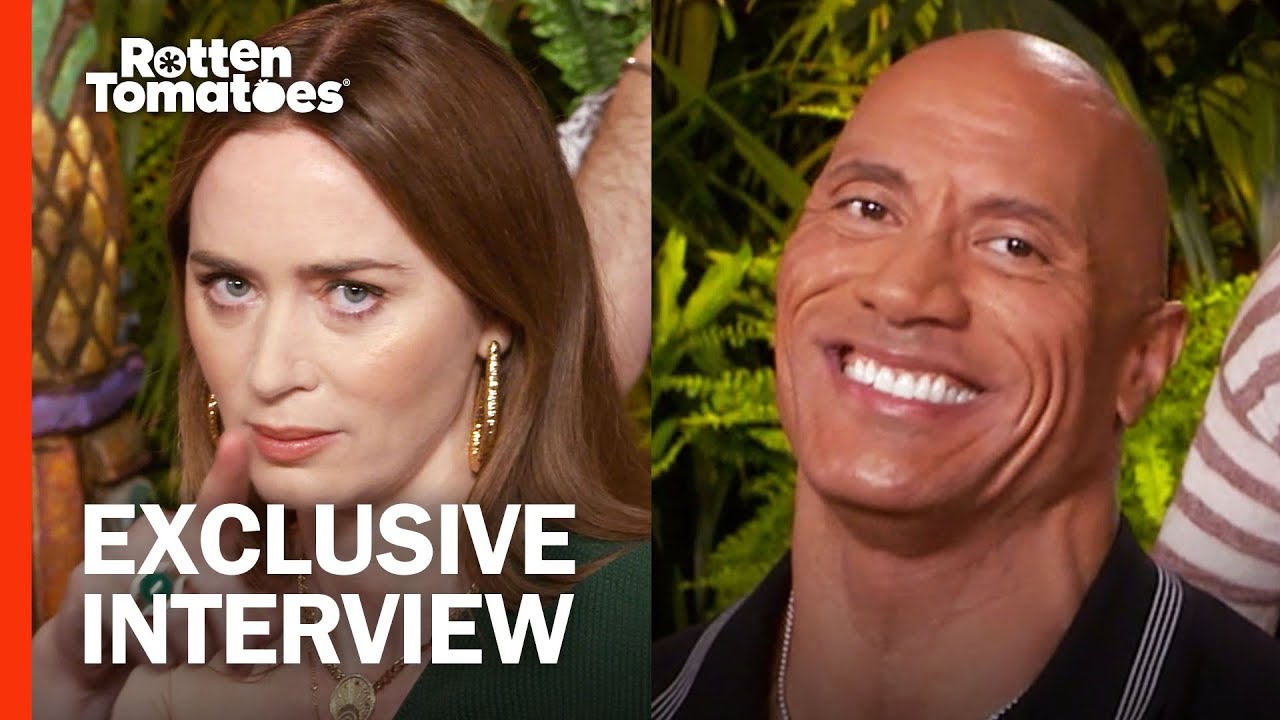
Emily Blunt quickly made a name for herself with a breakthrough supporting role inThe Devil Wears Prada (2006). Since then, she’s appeared in numerous films, including The Jane Austen Book Club (2007), Charlie Wilson’s War (2007), andSunshine Cleaning (2008), garnering plenty of fans and critical attention. Now she takes on her largest role yet as the titular queen in The Young Victoria.
San Francisco Bay Guardian: How do you approach a role when you’re playing a historical figure?
Emily Blunt: Well, you want to do it justice, and factually of course, you want to remain as close to what you’ve researched. In a way there’s a challenge because it’s your take on her as well. And it’s not that I wanted to make her contemporary, but I wanted to have a fresher look on that period, so that I presented her as the girl rather than as the queen. Because I think that’s more relatable, and I think that people can understand being young and being in love and feeling overwhelmed, rather than a rather stiff portrayal of a monarch. Not many people can relate to that. What I loved about the script is that it allowed us so much room to explore the private side of her. The public side was such a performance, in a way. And that’s what I loved — I found it revealing and intimate, and I liked that.
SFBG: How familiar were you with Queen Victoria’s life before you took on the role?
EB: Like, really unfamiliar. I mean, I knew about her as being old and grizzled and sour-faced and repressed, and so I think it was exciting and enlightening for me to read the script. Because I knew nothing about when she was young and the vibrancy that she had and the strength of character. She was a rebel, really, for that time, very forward-thinking, a modern thinker. And passionate — loved intensely, hated intensely. So I think she sort of appeared to be a shell of a woman after Albert died, so I’m excited for people to see her.SFBG: I wanted to ask about the love story between Victoria and Albert, because it’s so central to the movie.
EB: It kind of is the movie, in a way.
SFBG: Yeah. Well, the film is largely about her independence and how she’s the queen, and it’s not about her advisors or her husband. How do you balance that with this love story where she’s clearly very devoted to Albert at the same time?
EB: Well, she was hugely in love with Albert, but she was also hugely in love with her independence that she craved for so many years and had never been allowed. There was a sense with her that as much as she loved him, she didn’t want to be managed or controlled by anyone at this stage. I think she quickly realized that that was never what Albert intended, but that he certainly didn’t intend for their marriage to be that he goes for a nice ride and comes back and she tells him how her day was. He wanted to be involved. He was a very educated man. And she needed him. So I think once that sort of stubborn teenage rebellion of wanting to be independent had sort of lessened. He went on to become her greatest achievement in many ways.
SFBG: Switching over to an aesthetic level, the costumes in the film are gorgeous. How was it wearing them? I imagine some of the bigger ones were pretty hard to navigate.
EB: They’re very hard to navigate — that is definitely the word. You feel exhausted by them. I mean, I did find them exhausting to wear. Beautiful and transporting, in that they helped me sit up straight because I’m a notorious slouched. I loved the look of them, but my inner organs didn’t.
SFBG: And then in terms of speaking and carrying yourself, did you have to adopt a different inflection to suit the role and the period?
EB: Yeah, ‘cause I speak a little more casually, obviously. Because I’m not really as posh as her. So I had to adopt a formality in the way that she spoke but without making it too stiff. It really was that 1940s clipped British accent that our queen speaks with, came in as a result of the ‘30s and ‘40s, and the way that everyone spoke in the UK, and everyone followed her. But in Victorian times, there aren’t any records of how she spoke. There aren’t any recordings. And so my feeling with that was, well, I’m going to obviously make it more formal and more well-spoken than I am, but if anyone’s going to sort of squabble about whether I’m speaking correctly, I’m sort of like, well, prove it. Find a recording and prove it to me.
SFBG: Returning to the romance between Victoria and Albert. How do you develop rapport with your fellow actor and create that chemistry in such an intense love story?
EB: Well, it’s not sort of how — it just happens or it doesn’t. Rupert [Friend] and I were just great friends from the moment we met. We really got each other. We just understood each other and laughed a lot. So we genuinely enjoyed being together and we hung out outside of set on location. We’d all go to the pub in the evening, and I think that really helps. It really builds a camaraderie. So you find things that you really like about the other person, and then in that way, you can see those and you can bring them out. But we were just great friends. We felt like brother and sister by the end of it, which is probably not sort of the chemistry you want, but at least, on screen there’s a familiarity and there’s also an ease with each other, which I felt we had very early on. It felt easy with each other.
SFBG: Well, one of the things that really impressed me about the film is that it’s kind of epic in stature. It’s hugely opulent. But it’s also full of great performances — you all stand out against these backdrops. Is that a concern when you’re making a film on this scale?
EB: That’s a very good question. I think that it’s funny because the world that you create has to be correct, because then the implications of what occurs in that world don’t matter. So yeah, you do have to create that world, which is opulent and ostentatious in a way. There’s a grandeur to it. But it is hard in a way not to be overwhelmed by that and allow that to swallow you up, because you have to forget, almost, what you’re wearing and that your hair looks weird compared to how you normally wear it. So there’s a lot of focusing in. You have to almost fight against the world to find the real moments within it. It’s an interesting balance. I found it challenging, because I didn’t want it ever to appear arch. I think that period dramas can do that sometimes. Costume dramas have a tendency to do that.
SFBG: You hear talk about Hollywood royalty and celebrities often compared to royalty. I’m not going to ask you about your personal life, but you are in a high-profile relationship with another actor. Do you ever feel the sort of negativity that you see in The Young Victoria, insofar as being overprotected or watched too closely?
EB: It’s funny, because I don’t feel like I’m hounded in any way. You make a choice to fuse that element of your job, and it is just making a choice to remove yourself from the scenes or the places to go, which are predictably going to have people outside with cameras. So I think it can be done, but I have a certain awareness about myself when I step outside that I didn’t have before I did this job. I think the Internet is the thing that screws us now. Even though in [Queen Victoria’s] day, she was really scrutinized and people drew cartoons of her in the newspapers, it’s not the immediacy that we have these days, the worldwide immediacy.
But I don’t know, because I don’t count myself — “Hollywood royalty” makes me feel ill actually. The whole thing is just gross. I think movies are a wonderful thing, and I think they give people an escape or the opposite, sometimes a really wonderful confrontation of what they need to look at in themselves. It’s a very transporting world, and I think it’s a wonderful job. It’s a very important one. And so when it can be blacklisted in a way, or when it’s smeared across the papers as something else, something kind of seedy and personal, I think that’s when it’s upsetting. But I personally don’t feel that hounded by it. I remember my friend saying to me once, “I suppose that means business is good.” I thought that’s kind of a smart way of looking at it.
Source: SFBG